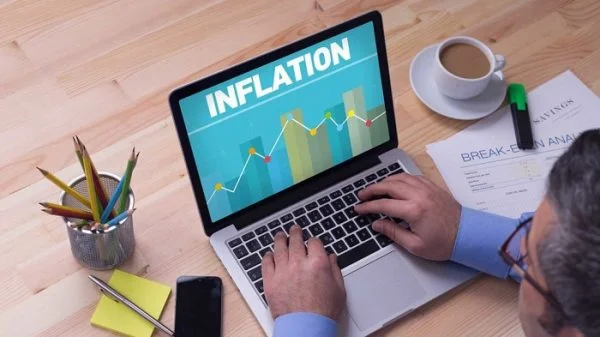
Inflation is one of those economic terms we hear constantly—in the news, during political debates, and around the dinner table when discussing the rising cost of groceries. Yet, for many, its true definition, causes, and effects remain hazy. At its core, inflation is the rate at which the general level of prices for goods and services is rising, and consequently, purchasing power is falling. Think of it as a silent, invisible tax that slowly erodes the value of your money. If a basket of groceries costs 10% more this year than it did last year, and you have the same income, you are effectively 10% poorer in real terms.
The Mechanics of Money: How Inflation Works
To understand inflation, you must first grasp the concept of purchasing power. In a healthy economy, your income should, at the very least, keep pace with inflation. When inflation occurs, a single unit of currency buys less than it did in previous periods.
The most common measure of inflation is the Consumer Price Index (CPI). The CPI is calculated by taking price changes for a basket of consumer goods and services—including transportation, food, medical care, and housing—purchased by typical urban households. This index provides a benchmark to assess the average change in prices over time, giving policymakers and consumers a clear picture of the current rate of inflation.
There are also several key types of inflation that economists categorize, based on their underlying cause:
- Demand-Pull Inflation: This occurs when aggregate demand in an economy outpaces aggregate supply. Essentially, “too much money is chasing too few goods.” When people have high confidence, lower unemployment, and access to easy credit, they spend more. If businesses can’t ramp up production fast enough to meet this surge in demand, they simply raise prices.
- Cost-Push Inflation: This happens when the costs of production increase, forcing businesses to raise their prices to maintain profit margins. Common causes include a rise in the price of raw materials (like oil or lumber), higher wages for labor, or new taxes. The cost increase is “pushed” onto the consumer.
- Built-In Inflation (or Wage-Price Spiral): This is often a result of the first two types. Once workers experience rising prices (demand-pull or cost-push), they demand higher wages to maintain their standard of living. Employers, in turn, raise the prices of their products to cover the increased labor costs. This creates a self-fulfilling loop where inflation expectations drive actual inflation.
The Root Causes: Why Do Prices Rise?
Inflation isn’t a random event; it’s driven by fundamental economic forces, primarily relating to the supply and demand for both money and goods.
1. Monetary Policy and Money Supply
Perhaps the most significant driver of inflation is the money supply. Economists, particularly those of the monetarist school, argue that inflation is always and everywhere a monetary phenomenon. If a central bank (like the U.S. Federal Reserve or the European Central Bank) injects too much money into the financial system, the value of each existing unit of currency decreases. This is often done through policies like quantitative easing (buying government bonds) or lowering interest rates, which make it cheaper for banks to lend money, increasing the overall money available for spending.
2. Fiscal Policy and Government Spending
When governments spend large amounts of money without a corresponding increase in productivity, they inject extra demand into the economy. If this spending is funded by taking on debt (running a budget deficit), it can be inflationary, especially if the central bank monetizes that debt by printing money. Tax cuts can also be inflationary, as they leave consumers with more disposable income to spend.
3. Supply Chain Disruptions
Recent history has highlighted the impact of supply chain issues. When events like wars, pandemics, or natural disasters disrupt the movement of goods, the supply of certain products shrinks drastically. With reduced supply but steady demand, prices for those bottlenecked goods skyrocket, contributing to cost-push inflation. A sudden increase in the price of crude oil, for instance, affects nearly every part of the economy, from gasoline prices to manufacturing costs.
4. Exchange Rates
For countries that rely heavily on imports, a depreciation in the local currency’s exchange rate can lead to inflation. If the local currency weakens against the currency used to pay for imports, the cost of those foreign goods (oil, electronics, etc.) rises when translated back into the local currency. This imported inflation is then passed on to consumers.
The Economic Effects: Who Wins and Who Loses?
Inflation has a complex impact, creating winners and losers within an economy.
The Losers:
- Fixed Income Earners: Retirees or those on fixed pensions are hit hardest. If their income doesn’t increase, the real value of their money constantly decreases, forcing a lower standard of living.
- Savers and Lenders: Cash held in a regular savings account loses purchasing power. If inflation is 5% and your savings account yields 2% interest, you’ve lost 3% in real terms. Similarly, a bank that lent money at a low fixed interest rate loses out as the dollars they are repaid are worth less.
- Businesses with Fixed Prices: Companies that cannot easily adjust their prices (due to long-term contracts or menu costs) may see their profit margins severely squeezed by rising input costs.
The Winners:
- Borrowers: If you have a fixed-rate loan (like a 30-year mortgage), inflation is your friend. You borrowed “expensive” money, but you are repaying the debt with “cheaper” money (dollars that have less purchasing power).
- Owners of Real Assets: Assets that often act as an inflation hedge—like real estate, commodities (gold, oil), and potentially stocks—tend to appreciate in value as prices rise. Their nominal value typically increases to match or exceed the inflation rate.
Conclusion: The Goal of Price Stability
Inflation is not inherently bad; a small, predictable rate of inflation (typically around 2% per year) is often considered a sign of a healthy, growing economy. It encourages spending and investment, as consumers know that prices will be slightly higher tomorrow, discouraging them from hoarding cash.
The danger lies in high and unpredictable inflation—sometimes called hyperinflation when it spirals out of control. This kind of runaway price growth destroys confidence, discourages long-term investment, and can lead to political and economic instability. Central banks are tasked with a crucial balancing act: keeping prices stable without stifling economic growth. By monitoring the CPI and adjusting interest rates and the money supply, they attempt to steer the economy clear of both severe inflation and its opposite, deflation (a sustained decrease in the general price level), which is equally damaging.
Understanding inflation is key to making sound personal and business financial decisions, as it is a permanent, yet manageable, feature of modern economic life.